MacBooks (and now many premium PCs) instead run the system at a voltage close to the battery voltage
The old way (most older laptops)
Traditionally, laptops did this:
- Charger supplies a fixed high voltage (often ~19–20 V)
- That voltage is:
- Stepped down for the system rails
- Stepped down again to charge the battery (which is usually ~7–12 V)
- Result:
- More conversion stages
- More heat
- Bigger components
- Worse efficiency
This worked fine, but it’s electrically… kind of wasteful.
The Apple-style approach (now spreading everywhere)
MacBooks (and now many premium PCs) instead run the system at a voltage close to the battery voltage:
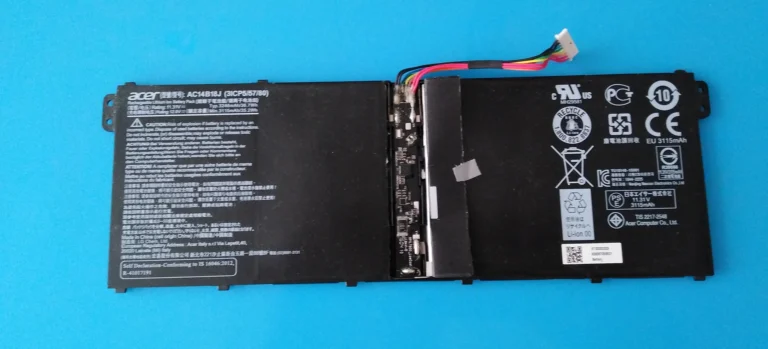
- Battery ≈ 11–12.6 V
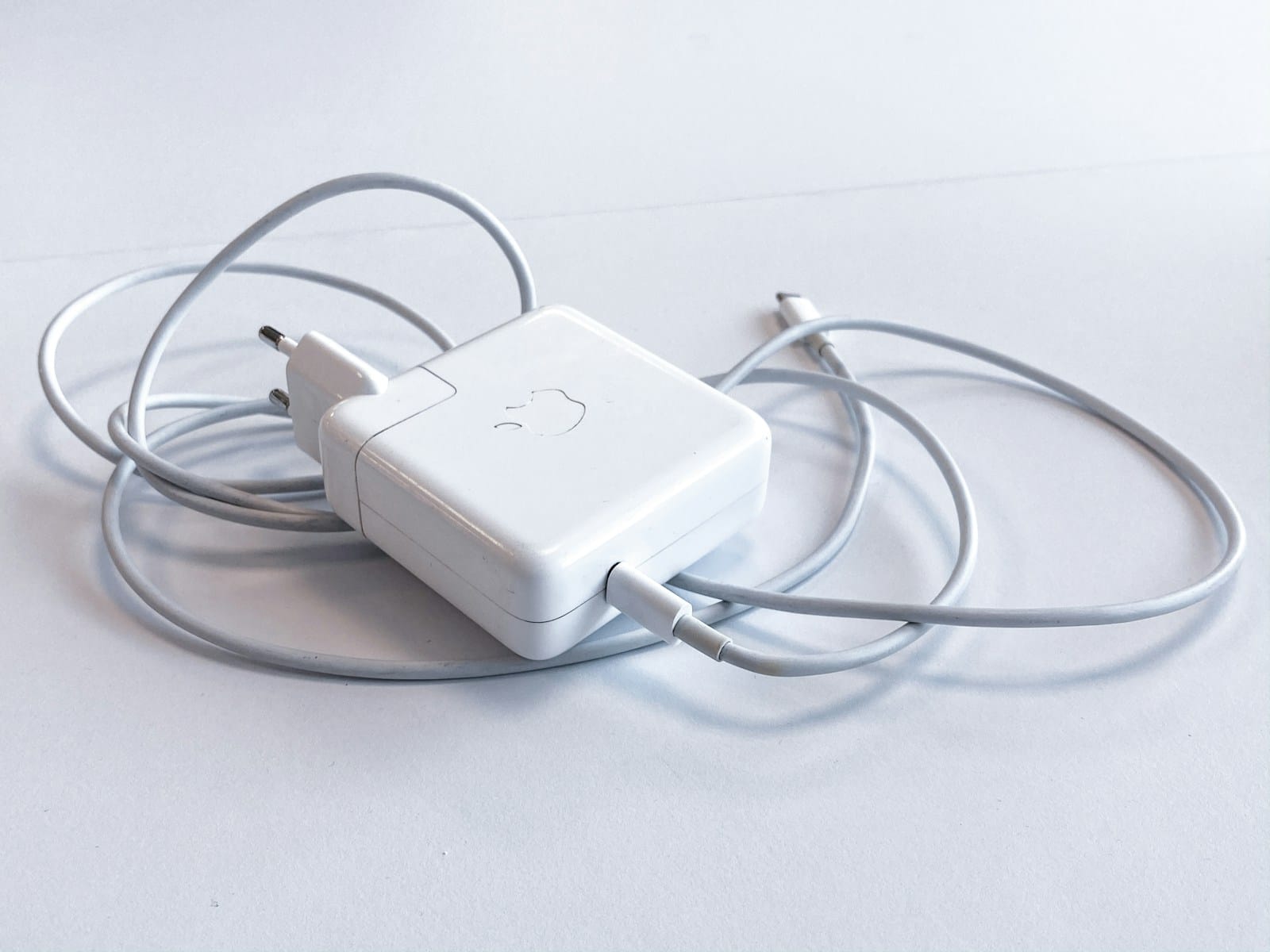
- Charger negotiates a voltage near that range (via USB-C PD or smart adapters)
- A bidirectional buck-boost controller (like ISL9240 / 9240HI):
- Boosts when charger voltage is lower
- Bucks when charger voltage is higher
- Seamlessly switches between battery and adapter
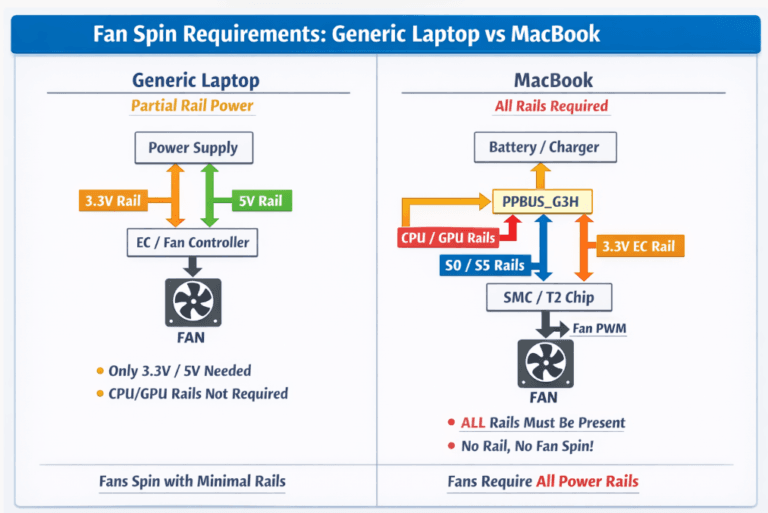
So the system rail (PPBUS_G3H) sits around battery voltage, not 19 V.
Why this is a big deal
- Much higher efficiency 🔋
Every voltage conversion loses energy as heat.
- Fewer big voltage jumps = less loss
- Battery → system is almost direct
- Charger → system only adjusts slightly
Result:
- Better battery life
- Less wasted power
- Cooler operation
- Less heat = thinner laptops 🌡️
High voltage → high switching losses → heat → bigger heatsinks.
By staying near battery voltage:
- MOSFETs run cooler
- Inductors can be smaller
- Power stages shrink
This is critical for thin-and-light designs (MacBooks, XPS, ThinkPads, ZenBooks).
- Seamless power sharing (battery + charger together)
Modern systems don’t just say:
“Battery OR charger”
They do:
“Battery + charger cooperate”
Example:
- Charger can supply 60 W
- CPU/GPU suddenly need 90 W
- Battery assists temporarily
- Charger recharges battery afterward
This is called hybrid power boosting, and it’s much easier when everything sits on one shared rail.
- USB-C PD made this practical
USB-C PD changed everything:
- Charger voltage is negotiated dynamically
- 5 V / 9 V / 12 V / 15 V / 20 V (and PPS in between)
- Laptop asks for the most efficient voltage for its current state
Apple was early here. Now:
- Intel’s VR13 / VR14 designs expect it
- AMD reference designs expect it
- Qualcomm ARM laptops require it
- Better battery health ❤️
Charging a battery from a voltage close to its own:
- Reduces charge current stress
- Reduces heat during charging
- Allows finer control of charge profiles
That’s why modern laptops:
- Charge slower at high percentages
- Pause charging under load
- Adapt based on temperature and usage
Why other brands are now copying this
Because the industry was basically forced to:
- Intel & AMD reference platforms now assume buck-boost architectures
- USB-C PD is mandatory on premium devices
- Thin designs leave no room for inefficient power stages
- Energy regulations are getting stricter worldwide
So today you’ll see this in:
- Dell XPS
- Lenovo ThinkPad T/X/P series
- HP EliteBook/ZBook
- ASUS ZenBook
- Framework Laptop
- Even gaming laptops (hybrid boost)
Apple just did it first and aggressively.
Repair-tech perspective (you’ll appreciate this)
This design also explains why MacBooks:
- Measure ~12 V instead of 19 V
- Still run when charger voltage changes
- Can confuse techs expecting “adapter voltage = system voltage”
- Die completely if the buck-boost controller fails (ISL9240 trauma 😅)
It’s elegant—but unforgiving.
Bottom line
Running laptops at battery-adjacent voltage is:
- ✅ More efficient
- ✅ Cooler
- ✅ Smaller
- ✅ Better for batteries
- ✅ Perfect for USB-C
Which is why this isn’t a trend anymore — it’s the new standard.